Arachnids
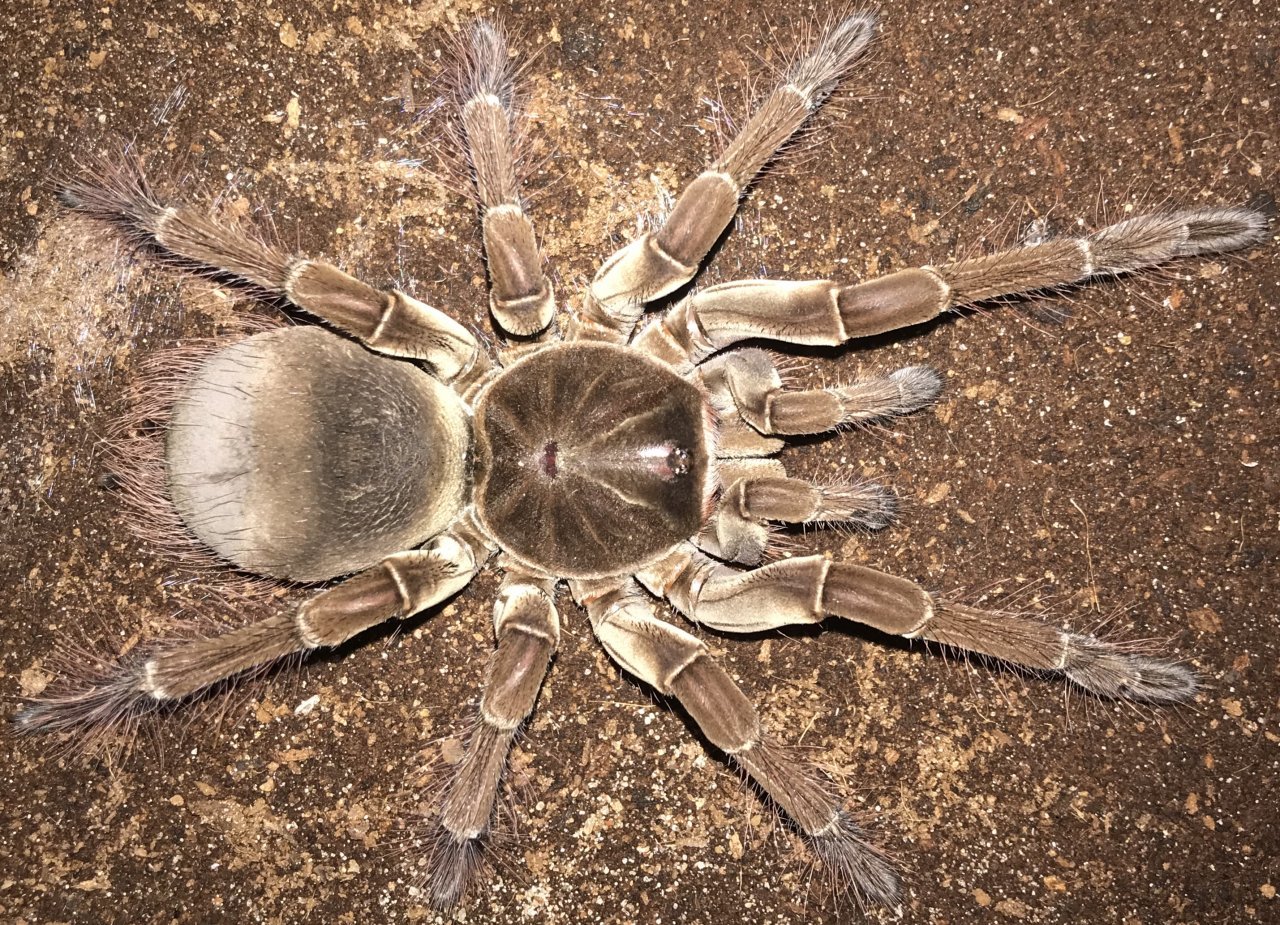
Goliath Bird Eating Spider (Theraphosa blondi) arachnoboards
https://arachnoboards.com/gallery/7%E2%80%9D-7-25%E2%80%9D-female-theraphosa-stirmi-burgundy-goliath-birdeater.62364/
Arachnids are among the most successful groups of terrestrial arthropods on Earth. This class includes spiders, scorpions, mites, ticks, harvestmen, whip spiders, and several lesser-known groups. Scientists have described approximately 93,000 arachnid species worldwide, though the true number is likely far higher due to the large number of undescribed tropical species (Coddington & Colwell, 2001).
The Amazon rainforest contains an enormous diversity of arachnids, many of which remain poorly studied. Arachnids occupy a wide variety of ecological roles within rainforest ecosystems. Some species are predators that help regulate insect populations, while others function as scavengers, detritivores, herbivores, or ectoparasites. Spiders and scorpions in particular are important mesopredators within Amazonian food webs.
Unlike insects, arachnids possess eight legs and lack antennae. Many arachnids also possess venom or silk production, adaptations that have helped them become highly successful terrestrial predators.
Goliath Bird Eating Spider (Theraphosa blondi)
The Goliath bird eating spider is the largest tarantula in the world by mass and one of the largest arachnids ever discovered. This species can reach a leg span of approximately 11 inches (28 centimeters) (Smithsonian National Zoo and Conservation Biology Institute). Despite its intimidating appearance, its venom is not considered medically significant to humans.
Like many tarantulas, the Goliath bird eating spider is primarily an ambush predator that lives in burrows on the rainforest floor. It feeds on insects, frogs, lizards, rodents, and occasionally birds, though birds are not a major part of its diet despite the spider’s common name. When threatened, it can defend itself by rubbing urticating hairs from its abdomen into the air, which can irritate the skin and eyes of predators.
Brazilian Wandering Spider (Phoneutria nigriventer)
The Brazilian wandering spider is one of the most medically significant spiders in the world due to its potent neurotoxic venom and defensive behavior. Unlike many spiders that rely on webs to catch prey, wandering spiders actively hunt at night across the forest floor.
These spiders are sometimes associated with banana plantations because they may shelter in banana plants during the day. Although there have been occasional reports of wandering spiders being transported with banana shipments, stories about them commonly appearing in supermarket bananas are often exaggerated.
Despite their fearsome reputation, serious envenomations are relatively uncommon, and modern antivenom treatment has significantly reduced fatalities.
Brazilian Yellow Scorpion (Tityus serrulatus)
The Brazilian yellow scorpion is one of the most medically significant scorpions in South America. Although many people assume all scorpions are deadly, this is far from true. Most scorpion species pose little danger to humans, and even among dangerous species, fatalities are relatively uncommon when medical treatment is available.
The Brazilian yellow scorpion possesses a powerful neurotoxic venom and is responsible for many serious scorpion stings in Brazil. Children are especially vulnerable because of their smaller body size. Despite its reputation, the fatality rate from envenomation is relatively low with modern medical care.
Like many scorpions, the Brazilian yellow scorpion is a nocturnal ambush predator that feeds primarily on insects and other small arthropods. Scorpions play an important ecological role by helping regulate prey populations.
Amazonian Black Scorpion (Tityus obscurus)
The Amazonian black scorpion is another medically significant scorpion species found in the Amazon Basin. Like other scorpions, it is a nocturnal ambush predator that relies on venom to subdue prey and defend itself.
While scorpion stings are often feared, fatalities are uncommon when proper medical treatment is available. Nevertheless, medically significant scorpions remain an important public health concern in parts of tropical South America.
Ecological Importance of Arachnids
Arachnids play an essential role in maintaining ecological balance within the Amazon rainforest. Predatory spiders and scorpions help regulate populations of insects and other arthropods, including some agricultural pests and disease vectors. Mites and other small arachnids contribute to decomposition and nutrient cycling within rainforest soils.
Because many arachnids are highly sensitive to environmental change, they are also important indicators of ecosystem health. Habitat destruction, climate change, and deforestation may threaten many poorly studied Amazonian arachnid species before scientists have even been formally documented.
References:
Coddington, Jonathan A. Colwell, Robert K. (2001) Arachnids Encyclopedia of Biodiversity
https://www.sciencedirect.com/topics/biochemistry-genetics-and-molecular-biology/arachnid
Goliath bird eating tarantula Smithsonian National Zoo and Conservation Biology Institute
Horta, Carolina Campolina Rebello. Magalhaes, Barbara de Freitas. Oliveira-Mendes, Barbara Bruna Ribeiro. Carmo, Anderson Oliveira de. Duarte, Clara Guerra. Felicori, Liza Figueiredo. Machado-de-Avila, Richardo Andrez. Kalapothakis, Evanguedes. (February 13, 2014) Molecular, Immunological, and Biological Characterization of Tityus serrulatus Venom Hyaluronidase: New Insights into Its Role in Envenomation Plos Neglected Tropical Diseases
https://pmc.ncbi.nlm.nih.gov/articles/PMC3923731/