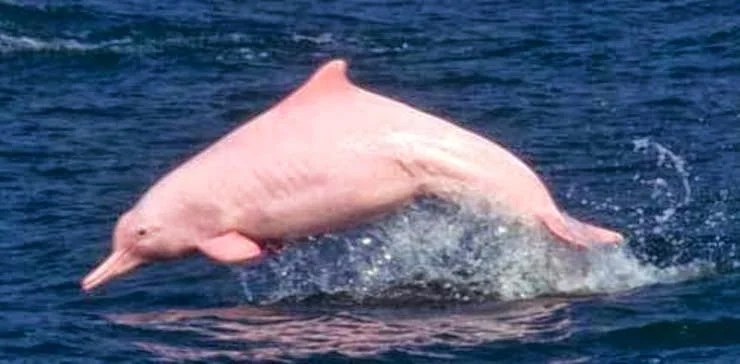
Botos, also known as Amazon river dolphins or pink river dolphins (Inia geoffrensis), are among the most intelligent animals in the Amazon region. Dolphins are widely regarded as some of the smartest animals on Earth, comparable in intelligence to the great apes, and because there are no great apes native to the Amazon rainforest, botos may be among the most intelligent animals in the ecosystem. However, boto intelligence has not been studied as extensively as the intelligence of bottlenose dolphins due in part to the difficulty of studying animals in the murky rivers and flooded forests of the Amazon Basin.
Unlike the streamlined oceanic dolphins familiar to many people, botos have several unusual adaptations for life in the Amazon’s complex river systems. Their neck vertebrae are not fused together like those of most dolphins, allowing them to turn their heads from side to side as they navigate flooded forests and submerged vegetation. They also possess long snouts lined with specialized teeth suited for catching a wide variety of prey including fish, crabs, and freshwater turtles.
Botos are famous for their pink coloration, although younger individuals are usually gray. As they age, many become increasingly pink due to blood vessels near the skin, scar tissue from interactions with other dolphins, and natural pigmentation. Males are often pinker than females because they tend to accumulate more scars from aggressive encounters with rivals.
The waters of the Amazon are often muddy and filled with sediment, making visibility poor. Due to the fact that botos rely heavily on echolocation rather than eyesight. Like other dolphins, they emit clicks and interpret returning echoes to navigate, locate prey, and understand their surroundings. This adaptation allows them to hunt effectively even in nearly opaque water.
The Amazon river dolphin is currently listed as Endangered by the International Union for Conservation of Nature (IUCN). Major threats include entanglement in fishing nets, habitat destruction, river pollution, dam construction, and direct hunting. In some areas botos are killed so their carcasses can be used as bait for scavenger catfish. Beliefs that boto oil or body parts possess medicinal or aphrodisiac properties have also contributed to poaching.
Botos are deeply embedded in Amazonian folklore. One of the most famous legends claims that botos can shapeshift into handsome men who emerge from rivers at night to seduce women before returning to the water by dawn. In some versions of the story the boto wears a hat to hide the dolphin blowhole on top of its head. Anthropologists and historians have suggested that these stories may have partially developed as a way of explaining pregnancies where the father was absent or unknown, including pregnancies linked to exploitation and abuse during the colonial period. Over time the legends became an important part of regional folklore throughout the Amazon.
Today, the boto serves as both an important predator within Amazonian river ecosystems and a powerful cultural symbol. Its survival is closely linked to the health of the Amazon’s rivers and flooded forests, demonstrating how ecological conservation and cultural traditions can become deeply interconnected.
References:
Amazon River Dolphin IUCN Red List
https://www.iucnredlist.org/species/10831/50358152
Watson, Cassie Lloyd. (October 18, 2025) How a colonial myth continues to threaten the Amazon river dolphin Sea Watch