Bullet Ants
Encyclopedia Britannica
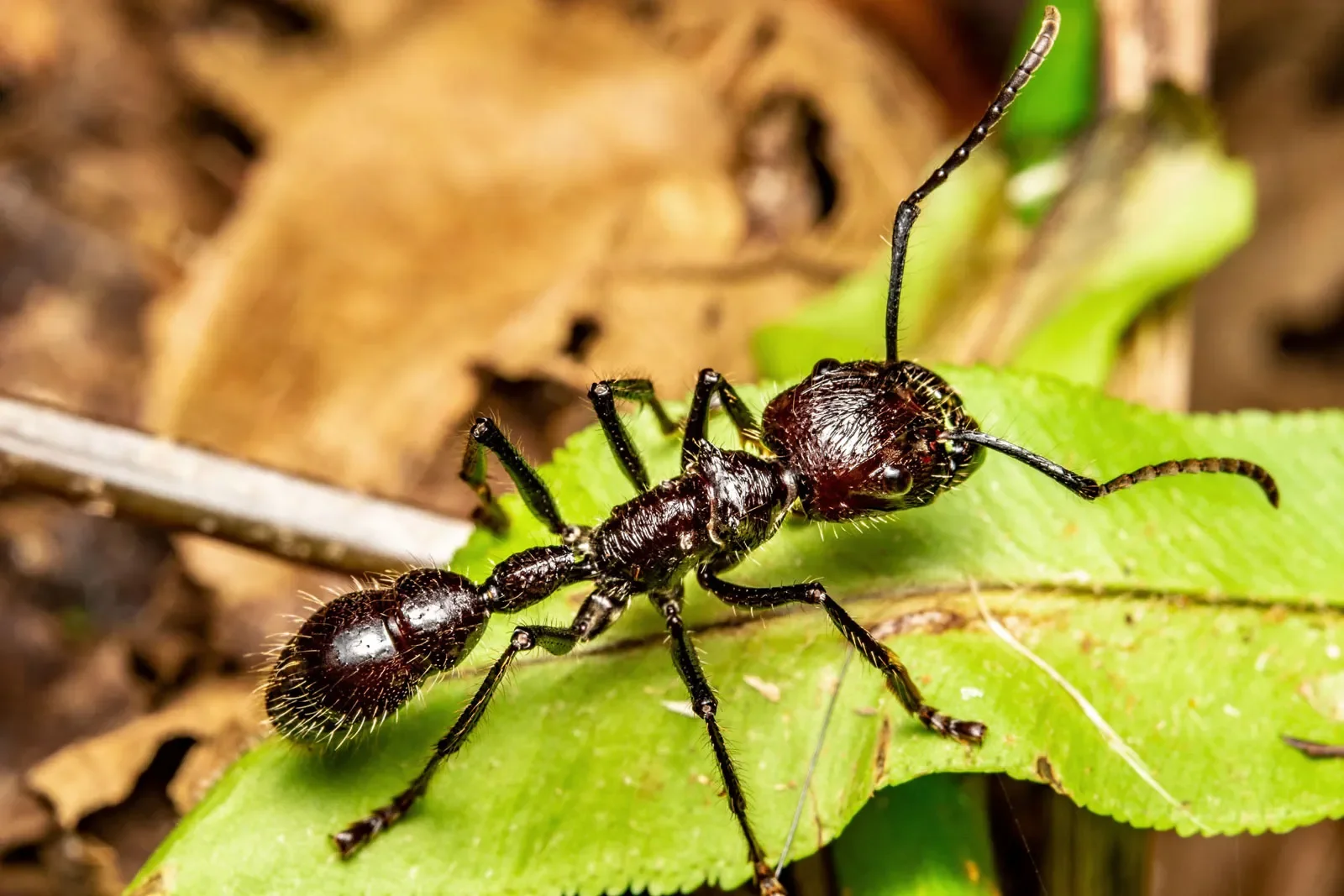
The bullet ant (Paraponera clavata) is widely regarded as having the most painful sting of any insect. Entomologist Justin O. Schmidt, creator of the Schmidt Pain Index, ranked its sting at the very top, describing it as “pure, intense, brilliant pain.” The sensation has often been compared to being shot, with effects that can last up to 24 hours (BBC Wildlife Magazine).
This extreme pain is caused by a powerful neurotoxic venom that affects the nervous system. In addition to intense pain, stings can cause trembling, sweating, and temporary loss of motor control in the affected area. Despite their reputation, bullet ants are not especially aggressive and typically sting only when threatened.
Ecology and Behavior
Bullet ants are among the largest ants in the Amazon, reaching lengths of about 2.5 cm (1 inch). They are primarily predatory foragers, feeding on small arthropods as well as nectar. Unlike army ants, they do not swarm; instead, they forage individually along established trails.
They typically nest at the base of trees and form relatively small colonies compared to many other ant species. Their role as predators helps regulate populations of other insects, contributing to the balance of rainforest ecosystems.
The Sateré-Mawé Initiation Ritual
The extreme pain of the bullet ant has been incorporated into initiation rituals by the Sateré-Mawé people of the Amazon.
In this ritual, bullet ants are woven into gloves with their stingers facing inward. Initiates wear these gloves and endure repeated stings as a test of endurance and resilience. The purpose is not simply to withstand pain, but to demonstrate readiness for adult responsibilities and the ability to face hardship.
Members of the Sateré-Mawé have stated that this ritual helps build the strength needed to endure life’s challenges. They have also connected it to their ability to survive historical pressures, including colonialism, and to continue resisting modern threats such as land encroachment (Borges, 2019).
A Unique Link to Conservation
Bullet ants are tied to the Amazon in a way that goes beyond ecology. They are part of a cultural system that reinforces identity, resilience, and continuity.
Protecting the rainforest does not just preserve species like Paraponera clavata—it also helps preserve the cultural practices and knowledge systems of the people who live there. In this sense, the bullet ant represents a clear intersection of biology, culture, and conservation.
References:
This innocent-looking insect delivers the most painful sting in the world and can leave you in agony for 24 hours or more BBC Wildlife Magazine
https://www.discoverwildlife.com/animal-facts/insects-invertebrates/bullet-ant-painful-sting
Borges, Thais. Bradford, Sue (April 25, 2019) Stinging ants: Amazon indigenous group girds itself to hold ancestral lands Mongabay