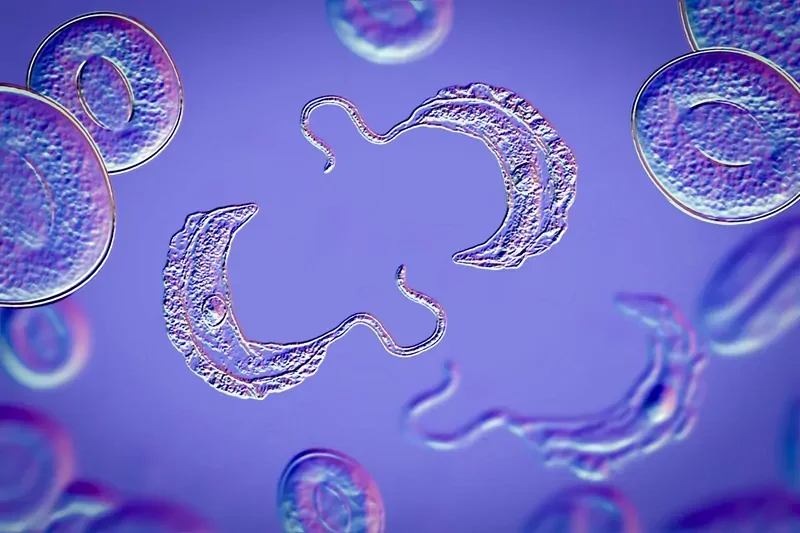
Chagas disease is caused by the protozoan parasite Trypanosoma cruzi. It can spread through infected triatomine insects, commonly called kissing bugs, which feed on blood at night. After feeding, an infected bug may defecate near the bite. Infection can occur when someone scratches or rubs the parasite-containing feces into the bite wound, another break in the skin, or their eyes or mouth. The parasite is not normally injected through the bug’s bite. Centers for Disease Control and Prevention, 2026
Chagas disease can also spread through contaminated food or drinks, from an infected mother to her baby, and through infected blood transfusions or organ transplants. Foodborne transmission is particularly relevant to the Amazon: researchers have documented outbreaks linked to açaí products contaminated with T. cruzi. In one Brazilian Amazon outbreak, the same parasite lineage was detected in patients’ blood and the implicated açaí juice. CDC, 2026; “Oral Transmission of Trypanosoma cruzi, Brazilian Amazon,” 2019
The disease begins with an acute phase lasting approximately two months. Many people experience no symptoms or only mild, nonspecific illness, such as fever, headache, muscle aches, or swollen lymph nodes. This makes the infection easy to overlook. World Health Organization, 2026
If the infection persists, it enters the chronic phase. Many people initially have the indeterminate form of chronic infection, meaning they have no apparent symptoms or detectable heart or digestive involvement. This period can last for decades, and some people remain in this form throughout their lives. However, the absence of symptoms does not mean that the parasite has disappeared. CDC, “Chagas Disease, an Endemic Disease in the United States,” 2025; WHO, 2026
Over time, some people develop serious complications. The World Health Organization estimates that up to one-third of people with chronic infection develop cardiac problems, while up to one in ten develop digestive, neurological, or mixed complications. Heart disease can cause abnormal rhythms, progressive heart failure, and sudden death. Digestive complications can include enlargement of the esophagus or colon. These problems often emerge one to three decades after infection, although the timing varies. WHO, 2026
The antiparasitic drugs benznidazole and nifurtimox are used to treat T. cruzi infection. Treatment works best when started early, and selected patients with chronic infection can also benefit. However, eliminating the parasite does not reverse established damage such as an enlarged, weakened heart or an abnormally enlarged esophagus. People with these complications may require additional treatment to manage organ damage, making early diagnosis and treatment especially valuable. CDC, “Treatment of Chagas Disease,” 2024; CDC, “Clinical Care of Chagas Disease,” 2024
References:
(February 4, 2026) How chagas disease spreads Center for disease control and prevention
https://www.cdc.gov/chagas/spreads/index.html
(March 6, 2025) Chagas Disease The Mayo Clinic
https://www.mayoclinic.org/diseases-conditions/chagas-disease/symptoms-causes/syc-20356212
Meymandi S, Hernandez S, Park S, Sanchez DR, Forsyth C. Treatment of Chagas Disease in the United States. Curr Treat Options Infect Dis. 2018;10(3):373-388. doi: 10.1007/s40506-018-0170-z. Epub 2018 Jun 26. PMID: 30220883; PMCID: PMC6132494.
https://pmc.ncbi.nlm.nih.gov/articles/PMC6132494/
Winters, Ryan. Nguyen, Tina. Waseem, Muhammed. (March 27, 2025) Chagas Disease StatPearls
https://www.ncbi.nlm.nih.gov/books/NBK459272/
(February 1, 2024) Treatment of Chagas Disease Center for Disease Control and Prevention
https://www.cdc.gov/chagas/treatment/index.html