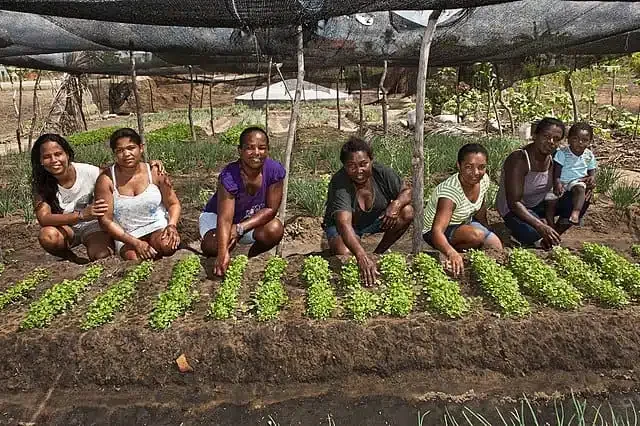
The Maroons
Rio & Learn
Maroons are people who escaped slavery and established independent communities, along with their descendants. Maroon societies developed throughout the Americas, including Brazil, the Caribbean, Colombia, Ecuador and the Guianas. In the Amazon region, two especially important traditions are Brazil’s quilombola communities and the Maroon peoples of Suriname and French Guiana. These are not the only Amazonian Maroons, but comparing them reveals how geography and colonial history produced different forms of resistance.
Brazil’s quilombos
Brazil received almost five million enslaved Africans during the transatlantic slave trade—more than any other country in the Americas. Enslaved people who escaped established communities known as quilombos or mocambos. Some were small and mobile, while others became permanent settlements with farms, political institutions and trading relationships.
The most famous was Palmares, a federation of mocambos that may have contained tens of thousands of inhabitants. Palmares resisted repeated Portuguese and Dutch attacks for most of the seventeenth century before it was finally destroyed. However, Palmares was located in what is now the northeastern state of Alagoas, outside the Amazon. It is an important example of Brazilian Maroon resistance, but it should not be treated as an Amazonian settlement or as the general name for federations of quilombos (Reis and Gomes, 2010).
Amazonian quilombos benefited from the enormous size of the forest and the limited reach of colonial authorities. Communities could establish themselves along remote rivers, move when threatened and maintain relationships with Indigenous communities, enslaved people and sympathetic traders. Their survival depended on farming, fishing, hunting and gathering as well as trade with the outside world.
Relationships between Maroons and Indigenous peoples were complicated. They included cooperation, intermarriage and exchanges of knowledge, but also competition and conflict. Indigenous people sometimes served as guides or advisors to newly escaped Africans. Maroons also learned about local plants, travel routes and forest environments from their Indigenous neighbors. Cassava became an important crop, although it should not be assumed that all Africans first encountered it in the Americas: the plant had been introduced from South America into Africa centuries earlier, and some enslaved Africans may already have known how to cultivate and process it.
Maroons of the Guianas
The largest and most politically independent Maroon societies in the Americas developed in Suriname and neighboring French Guiana. Their descendants include the Saamaka, Ndyuka, Aluku, Pamaka, Matawai and Kwinti peoples. According to Suriname’s 2012 census, Maroons constituted approximately 21.7 percent of the country’s population (Minority Rights Group, 2024).
The Guianese Maroons used the dense interior rainforest, extensive river systems and distance from coastal plantations to defend their communities. They conducted guerrilla attacks against plantations and colonial forces, liberated enslaved people and disrupted the plantation economy. Rather than remaining entirely hidden, some Maroon forces carried the conflict back into the colonial plantation zone.
Unable to defeat them, the Dutch colonial government negotiated peace treaties with several Maroon peoples. Treaties recognized the freedom and internal autonomy of the Ndyuka in 1760, the Saamaka in 1762 and the Matawai in 1767—approximately a century before Suriname abolished slavery. The Aluku, also known historically as the Boni Maroons, fought prolonged wars against Dutch forces before eventually settling primarily along the Lawa River in what is now French Guiana.
These treaties help explain why Maroon communities in the Guianas remained relatively large, concentrated and politically distinct. Brazilian quilombos were generally more scattered, whereas several Guianese Maroon peoples maintained recognized leaders, territories and institutions across generations.
Abolition and land rights
Brazil abolished slavery in 1888. Quilombola communities were no longer settlements of legally defined fugitives, but abolition did not give their residents secure ownership of the land they occupied. Many communities continued to face displacement by landowners, mining interests, ranchers and developers.
A major legal change came with Brazil’s 1988 Constitution. Article 68 recognized the right of qualifying quilombola communities to receive collective title to their traditional territories. Implementation has been extremely slow, however. Thousands of communities have been officially recognized as quilombola, but only a small proportion have received completed land titles. Mongabay reported in 2024 that only 57 territories had been formally titled through the federal process since the constitutional right was created (Gonzalez, 2024).
This delay threatens both people and forests. Quilombola territories often retain considerably more native vegetation than surrounding privately controlled land. Collective land rights allow communities to resist illegal logging, mining, land grabbing and conversion to industrial agriculture. Protecting quilombola ownership can therefore advance both historical justice and Amazon conservation.
The land-rights situation in Suriname and French Guiana is not necessarily more secure. Suriname’s historic treaties recognized Maroon freedom and autonomy, but the modern state has repeatedly failed to provide enforceable collective title to customary territories. In 2007, the Inter-American Court of Human Rights ruled that Suriname had violated the rights of the Saamaka people and ordered the government to recognize and title their traditional territory. Implementation remains incomplete, while logging and mining concessions continue to threaten Maroon lands.
French Guiana remains legally part of France, whose legal system provides only limited recognition of collective ethnic land ownership. Some Maroon and Indigenous communities have customary-use rights, but these are not equivalent to full collective ownership. Although Suriname and French Guiana retain very high levels of forest cover, Maroon communities still face pressure from gold mining, mercury pollution, logging and infrastructure development.
The history of Amazonian Maroons is therefore more than a story of people hiding in the forest. Maroon societies fought colonial armies, built farms and settlements, negotiated treaties, preserved African traditions and developed new cultures through generations of interaction with Indigenous peoples and the Amazon environment. Their descendants continue the struggle for control of lands their ancestors defended under slavery.
References:
Jose, Reis Joao. Dos Santos, Gomes Flavio. (April 28, 2010) Quilombo: Brazilian Maroons during slavery Cultural Surivival
(June 2024) Maroons in Suriname Minority Rights Group
https://minorityrights.org/communities/maroons/
Price, Sally. Price, Richard. (April 28, 2010) Maroons under assault in Suriname and French Giana Cultural Survival
Gomes, Flavio. (July 10, 2024) Quilombos, hotbeds of Afro Brazilian resistance The Unesco Courier
https://courier.unesco.org/en/articles/quilombos-hotbeds-afro-brazilian-resistance
Gonzales, Jenny. (October 15, 2024) Delays in land titling threaten the conservation success of quilombos in Brazil Mongabay