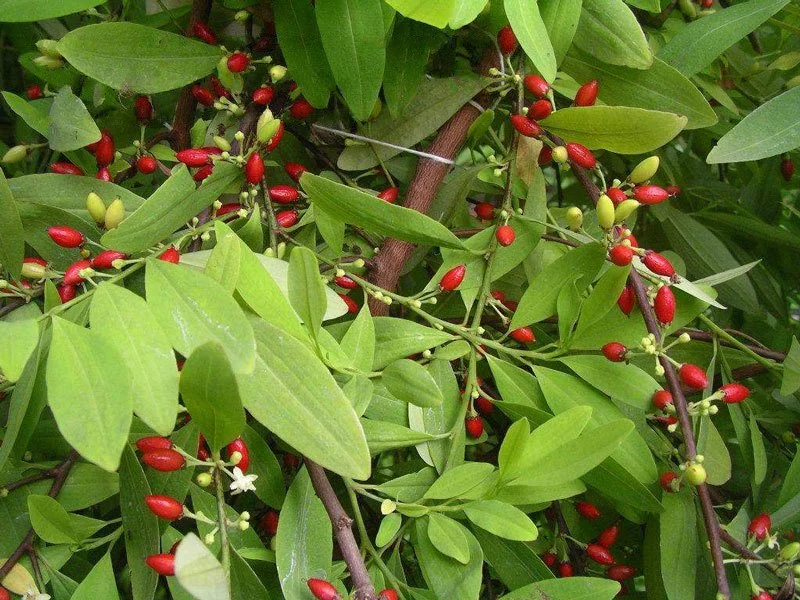
Coca Plant
Wikipedia
The coca plant (Erythroxylum coca) is best known as a source of cocaine, a powerful stimulant alkaloid found naturally in its leaves. However, its importance to people extends far beyond the production of this drug. Coca has a long history of traditional use among Indigenous peoples of South America, particularly in the Andean region. Its leaves remain important in daily life, traditional medicine, and cultural practices. Understanding coca therefore requires considering both its chemistry and its place in the societies that have cultivated and used it for generations (Biondich & Joslin, 2016).
Coca leaves are traditionally chewed or brewed into a tea-like herbal infusion. When chewed, the leaves are often held inside the cheek, allowing their compounds to be released gradually. These preparations produce relatively mild stimulation and are traditionally used to reduce feelings of fatigue and hunger. The effects are sometimes compared to those of coffee, although the active chemicals are different, and the comparison should not be taken to mean that their effects and risks are identical (Blickman, 2018).
Cocaine is already active within the leaves; refining extracts and concentrates it, allowing much larger doses to be consumed. The distinction between traditional coca use and concentrated cocaine therefore involves the concentration, the amount consumed, and how the substance enters the body. In a 2025 review, the World Health Organization concluded that traditional coca-leaf chewing and tea consumption do not pose major public-health risks. However, the organization also noted that evidence about long-term safety, dependence, and potential medical applications remains limited. This supports distinguishing traditional coca use from concentrated cocaine without assuming that a natural plant product is completely harmless (WHO, 2025).
Coca leaves can also be processed to remove cocaine while retaining other compounds used for flavoring. Such an extract is reported to be used in Coca-Cola (Bink, 2024). Early versions of the drink contained cocaine supplied by coca-leaf extract rather than separately added purified cocaine (Lee, 2021). However, the amount depended on the formulation, so the use of a plant extract alone does not establish how much cocaine the drink contained. This distinction also illustrates that coca leaves contain more than their best-known alkaloid: removing cocaine does not remove every characteristic that makes the leaves useful to people.
For the plant itself, cocaine appears to serve a defensive function. Research has demonstrated its insecticidal activity, supporting the hypothesis that it helps protect coca leaves against insect herbivores (Nathanson et al., 1993). Producing defensive chemicals is one way plants protect themselves from animals that would otherwise consume their tissues. Coca is therefore an example of how plant chemistry can have very different consequences for different organisms. A compound that helps discourage insects from eating leaves can also affect the human nervous system, bringing the plant into traditional cultural practices and, when concentrated, the production of a dangerous drug.
References:
Blickman, Tom. (September 20, 2018) Coca leaf: Myth and Reality International Drug Policy Consortium
https://idpc.net/publications/2018/09/coca-leaf-myths-and-reality
Bink, Addy (August 18, 2024) It used to cocaine and a nut - how is cola flavored today? Fox 8 News
https://fox8.com/news/it-used-to-be-cocaine-and-a-nut-how-is-cola-flavored-today/
Lee, Ella. (July 25, 2021) Fact check: Cocaine in Coke? Soda once contained drug but likely much less than post claims USA Today
Biondich AS, Joslin JD. Coca: The History and Medical Significance of an Ancient Andean Tradition. Emerg Med Int. 2016;2016:4048764. doi: 10.1155/2016/4048764. Epub 2016 Apr 7. PMID: 27144028; PMCID: PMC4838786.
https://pmc.ncbi.nlm.nih.gov/articles/PMC4838786/
Nathanson JA, Hunnicutt EJ, Kantham L, Scavone C. Cocaine as a naturally occurring insecticide. Proc Natl Acad Sci U S A. 1993 Oct 15;90(20):9645-8. doi: 10.1073/pnas.90.20.9645. PMID: 8415755; PMCID: PMC47626.
https://pmc.ncbi.nlm.nih.gov/articles/PMC47626/