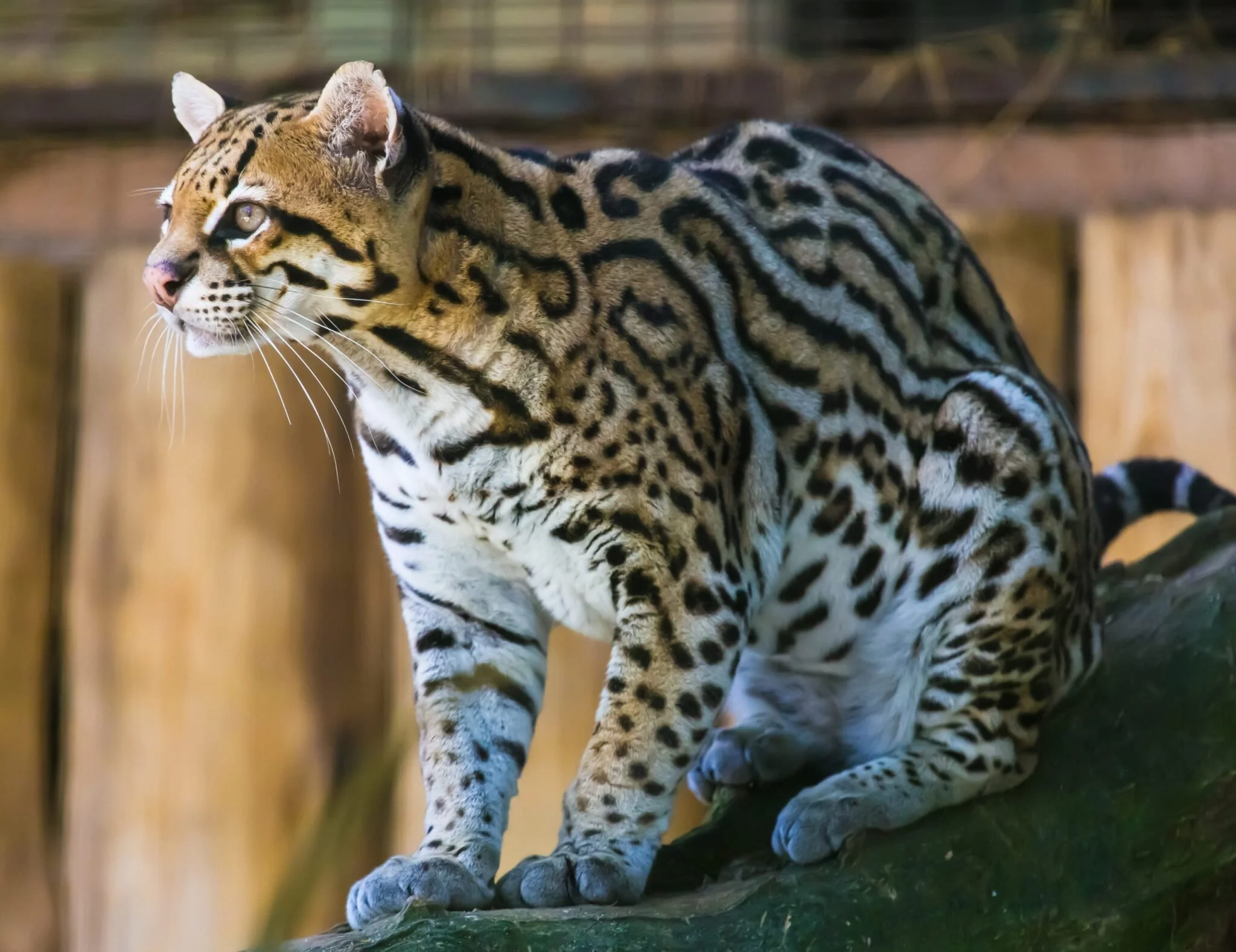
The ocelot (Leopardus pardalis) is a medium-sized wild cat found throughout much of tropical America, including the Amazon Basin. Adults typically weigh about 8–15 kilograms (18–33 pounds), with males generally larger than females. Their coats feature dark spots, rosettes, and elongated markings, with a pattern unique to each individual. Although excellent climbers and capable swimmers, ocelots generally hunt on the ground (IUCN/SSC Cat Specialist Group, n.d.). (catsg.org)
Ocelots inhabit rainforests, mangroves, and thorn scrub, relying heavily on dense vegetation for shelter and hunting cover. They are primarily nocturnal or active around dawn and dusk. Small rodents are important prey, but their varied diet also includes opossums, armadillos, birds, reptiles, and occasionally monkeys. Fish and crabs provide additional food in some environments. This flexibility allows them to exploit different prey as opportunities arise (Big Cat Rescue, n.d.). (bigcatrescue.org)
Larger prey, including agoutis and pacas, can contribute substantially to the amount of food ocelots consume, even where smaller animals dominate prey counts. Ocelots also interact with other forest predators. Their proposed suppression of smaller cats is called the “ocelot effect,” but its strength varies among studies. Habitat and prey availability may sometimes explain smaller cats’ distributions better than competition alone (IUCN/SSC Cat Specialist Group, n.d.). (catsg.org)
Ocelots are solitary, and males generally occupy larger home ranges that overlap those of several females. Females usually produce one or two kittens per litter. Young develop slowly, and this relatively low reproductive output makes populations vulnerable when deaths increase or habitat deteriorates (Big Cat Rescue, n.d.). (bigcatrescue.org)
The ocelot is classified globally as Least Concern, although its population is believed to be declining. It remains fairly common in protected parts of Amazonia (IUCN/SSC Cat Specialist Group, n.d.). Habitat destruction and fragmentation, vehicle collisions, retaliatory killing over poultry losses, and illegal trade continue to threaten the species. The extensive commercial fur trade of previous decades has diminished, but protection remains necessary. Conserving habitat and maintaining wildlife corridors are important measures for its future (Big Cat Rescue, n.d.). (catsg.org, bigcatrescue.org)
References
IUCN/SSC Cat Specialist Group. (n.d.). Ocelot. https://www.catsg.org/living-species-ocelot
Big Cat Rescue. (n.d.). Ocelot facts. https://bigcatrescue.org/conservation-news/ocelot-facts